

The Complete Guide to Full-Service Interior Design (& Why Your Home Deserves Nothing Less)
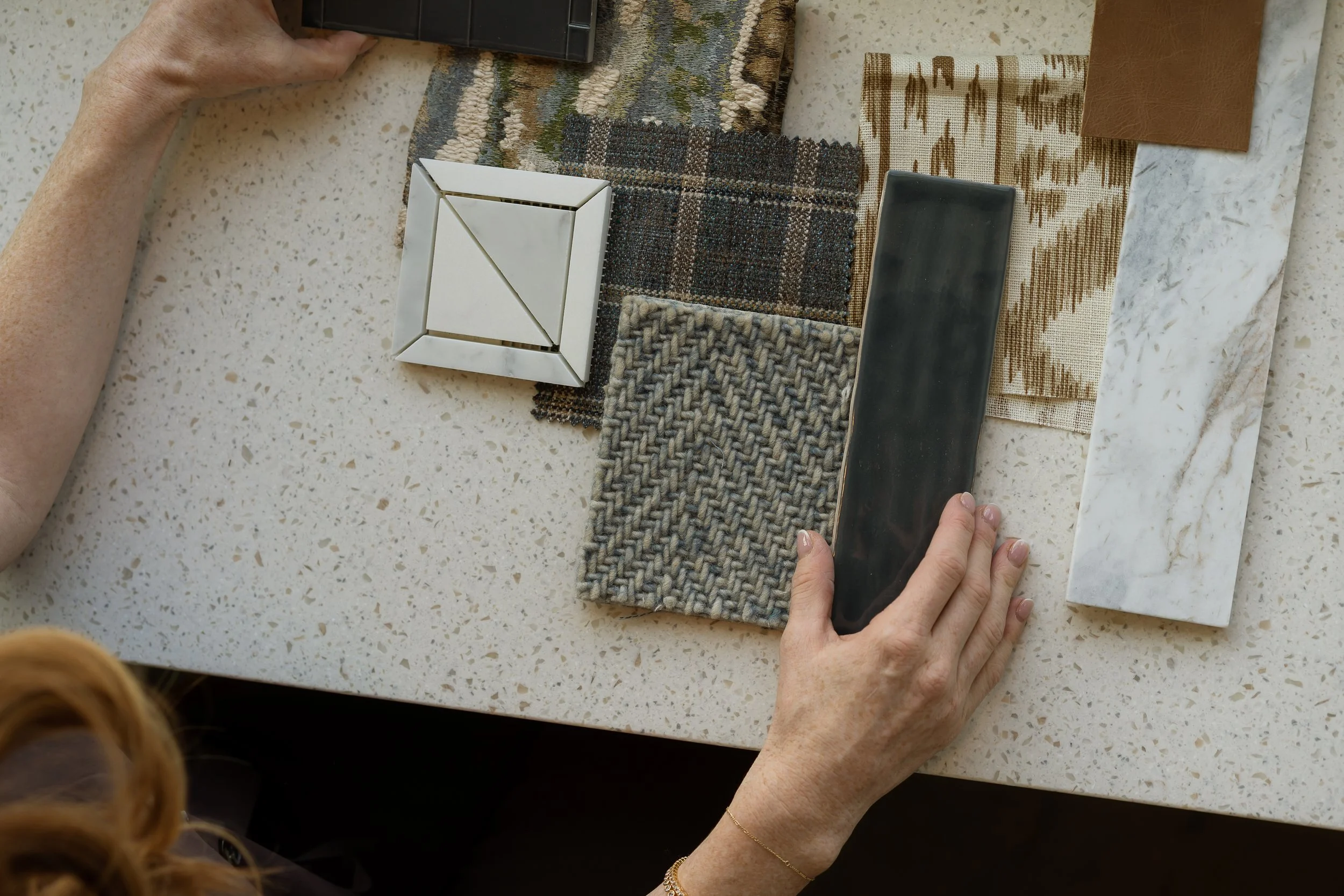
There's a version of interior design that most people have experienced or heard about from a friend. A designer comes in, shows you some fabric samples, helps you pick a sofa, and sends you an invoice. It's transactional and surface-level at best. And it leaves you managing a dozen of other domino decisions, wondering why the finished room still doesn't feel quite complete.
Full-service interior design is something different entirely. It's a comprehensive, start-to-finish partnership that touches every decision in your home, not just the ones that end up in a photograph. It's the difference between a room that looks designed and a home that feels designed. And once you understand what it actually includes, it becomes very difficult to imagine doing it any other way.
Here's what it really means.
It Starts Before Anyone Picks Up a Paintbrush
Full-service design begins long before a single finish is selected or a piece of furniture is ordered. It begins with a deep and unhurried conversation about how you actually live.
Where do the shoes really land? Who makes coffee first and does it happen in silence or with the news on? Do your kids do homework at the kitchen island or disappear to their rooms? Do you entertain often or almost never? Is your bedroom a sanctuary you retreat to or a room you pass through?
These questions shape everything that follows. A beautifully designed home isn't one that looks impressive, it's one that fits the specific, unrepeatable rhythm of the people living in it. This discovery phase is the foundation that every subsequent decision is built on, and it's something that simply doesn't exist in transactional design.
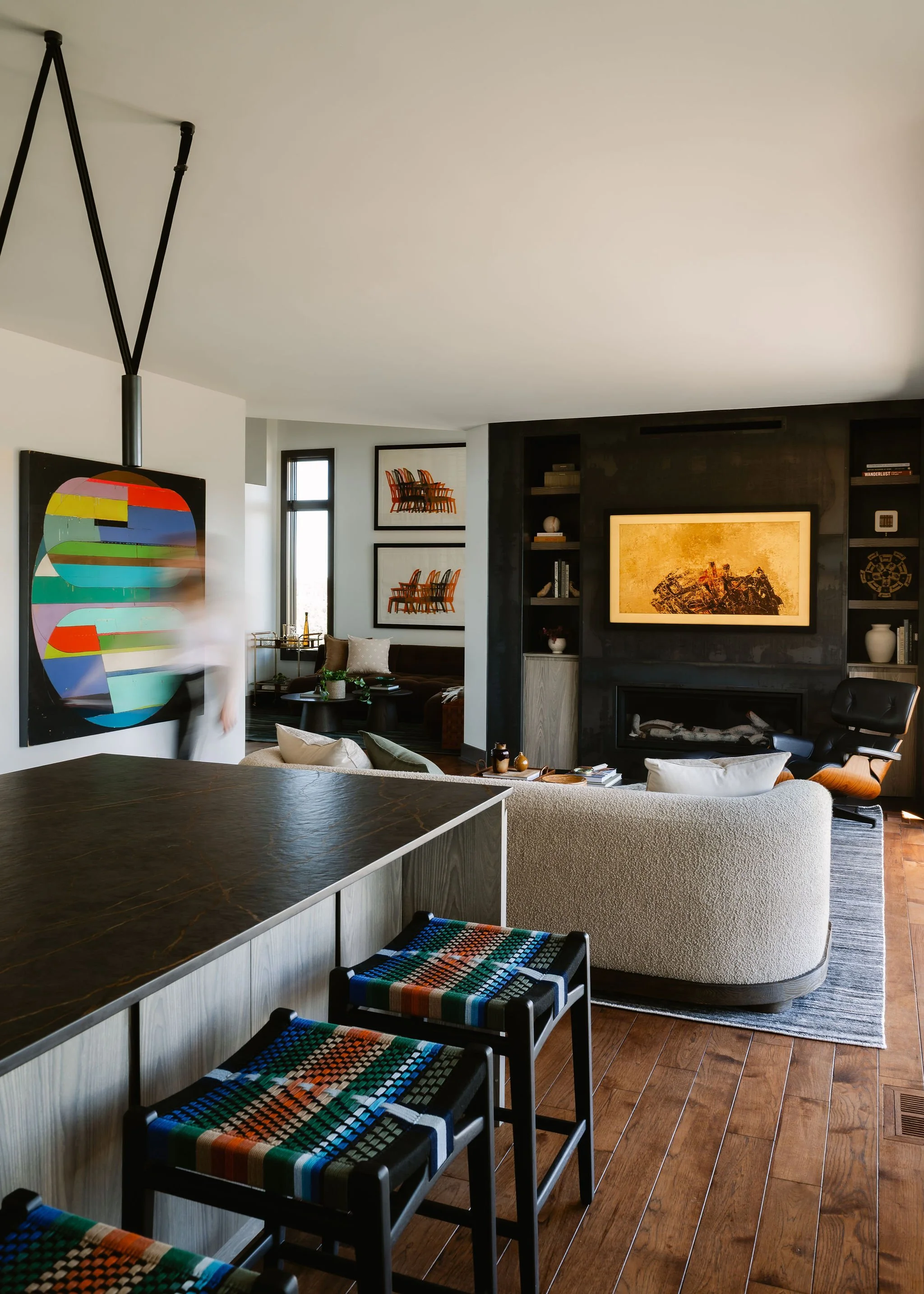
Space Planning and Interior Architecture: The Part Nobody Sees
Some of the most important work in a full-service project is invisible in the finished photographs. It's the decision to move a doorway eighteen inches to the left. The choice to eliminate a wall that was choking the light out of a room. The staircase that was rebuilt not just for code compliance but for how it feels to walk down it on a Sunday morning.
This is interior architecture: the bones of a home, reconsidered with fresh eyes and a clear brief. I collaborate closely with architects and builders at this stage, advocating for the interior experience at every decision. Because the most exquisite furniture in the world cannot compensate for a floor plan that doesn't flow, a ceiling that feels too low, or a kitchen that turns its back on the rest of the home.
Getting the architecture right first is what separates a renovation that transforms a home from one that simply updates it.
Every Finish. Every. Single. One.
Floors, walls, ceilings, cabinetry, countertops, tile, grout, hardware, plumbing fixtures, door handles, light switches, paint colors: In a full-service project, nothing is left to chance or delegated to a contractor making a quick decision on the day of install.
Every finish is selected as part of a unified story. Every choice is considered in relation to every other choice: how the warmth of the white oak floor reads against the plaster wall, how the brass in the kitchen hardware will age alongside the honed stone countertop, how the grout color in the shower will either elevate the tile or quietly undermine it.
This level of material curation is cumbersome. It requires sourcing trips, sample reviews in actual light conditions, and the willingness to start over when something that looked right on paper doesn't feel right in the space. It also requires access: to trade showrooms, to artisan makers, to products that simply aren't available at retail. That access is one of the most concrete, tangible values a full-service designer brings to a project.
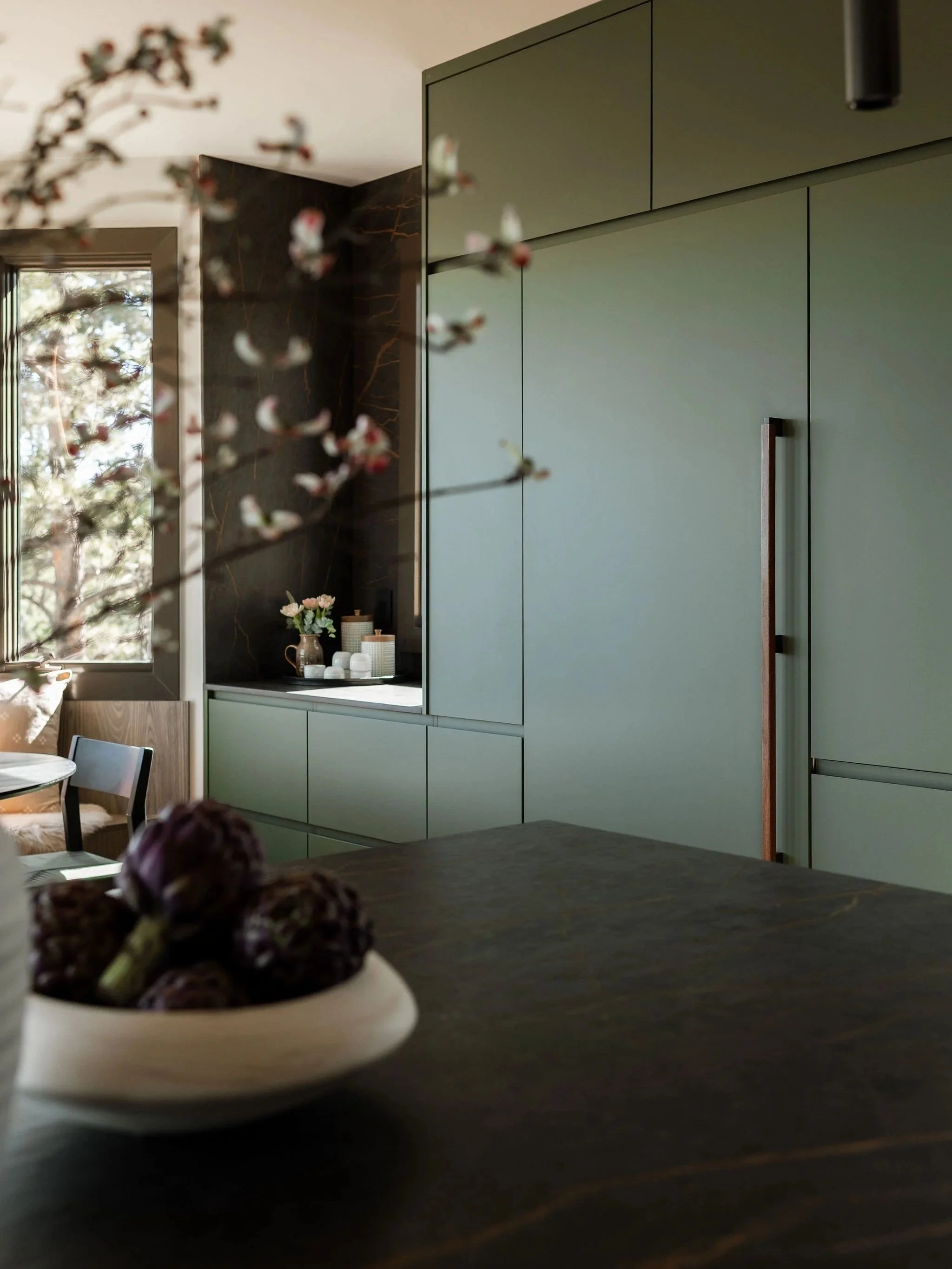
Custom Millwork and Cabinetry: Where a Home Gets Its Character
There is almost nothing that gives a home more personality, warmth, and specificity than beautifully designed millwork. Built-in bookshelves that frame a fireplace. A kitchen with cabinetry detailed like fine furniture. A mudroom with every inch considered for how a family actually arrives home. A primary closet that functions like a boutique and feels like a room.
In a full-service project, I draw every custom millwork detail and work directly with cabinet makers to ensure what gets built matches what was designed. This is one of the areas where the gap between a good result and an exceptional one is entirely in the details, and where having a designer who speaks the language of fabrication fluently makes an enormous difference.
Furniture, Art, and the Things That Make a House a Home
This is where most people assume design begins. In a full-service project, it's actually one of the last chapters and all the more powerful for it, because by this point the space has been designed to receive it.
Every piece of furniture is selected for scale, proportion, material, comfort, and its relationship to everything around it. Nothing is pulled from a single catalog or chosen because it was in stock. Sofas are specified for how they'll be used. A family with young children needs something different than a couple who entertains rarely. Dining chairs are chosen for how they feel after two hours at the table, not just how they look in the first five minutes.
Art and objects are sourced and placed with the same intention. Not as an afterthought, not as decoration layered over design, but as part of the same continuous conversation about what this home is and who lives here.
Project Management: The Part That Saves Your Sanity
Here is what most people don't fully anticipate when they begin a renovation: the sheer volume of decisions, communications, and coordination that happen between design approval and move-in day.
Contractor questions. Vendor lead times. Delivery windows. Damaged pieces that need to be reordered. Subcontractors who need clarity on a detail. Tile that arrives in the wrong finish. A light fixture backordered until a month after the electrician is scheduled.
In a full-service project, I manage all of it. I am the single point of contact between you and the entire project ecosystem. You are kept informed and involved in the decisions that matter. You are protected from the ones that don't need to reach you.
This is the part of full-service design that clients consistently say they underestimated before the project began and couldn't imagine living without by the end of it.
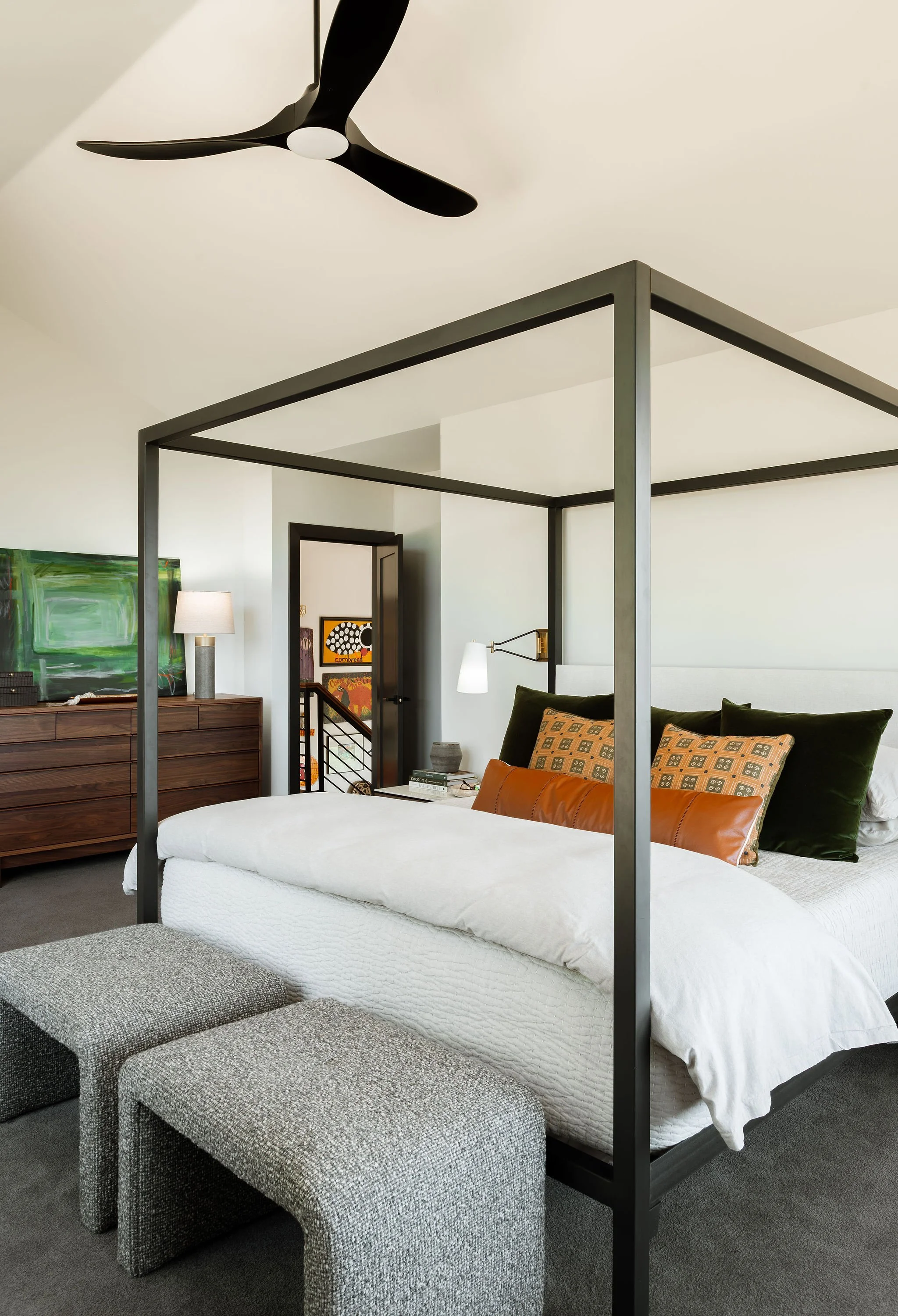
The Install and the Reveal: When It All Becomes Real
The final phase of a full-service project is the one that looks effortless from the outside and is anything but behind the scenes. Furniture arrives, art is hung, objects are placed, beds are made, books are shelved, and a home that existed only in drawings and samples and conversations suddenly becomes entirely, undeniably real.
I oversee every element of the install personally. The angle of a chair. The height of a mirror. The way a throw is placed on a sofa. These are not small decisions, they are the difference between a room that looks finished and one that feels alive. When you walk through the door for the first time, I want your only job to be feeling something.
That moment, the exhale, the quiet, the sense that this place was made for you, is what full-service design is actually for.
Why It Changes Everything
The practical answer is that a full-service project produces a better result. More cohesive, more considered, more personal, more durable. A home that was designed as a whole rather than assembled in pieces.
But the deeper answer is simpler than that.
Your home is where you begin and end every day. It's where your family gathers and where you go when the world is too much. It holds your mornings and your celebrations and your ordinary Tuesdays. It deserves the same level of intention that goes into the places you travel to specifically because they make you feel something extraordinary.
Full-service design is how you get there.
Michaela Kahler Interiors offers full-service residential interior design for renovations and new builds throughout Denver, Boulder, and the Colorado mountain region. If you're beginning to think about a project and want to understand what working together might look like, I’d love to hear from you.